
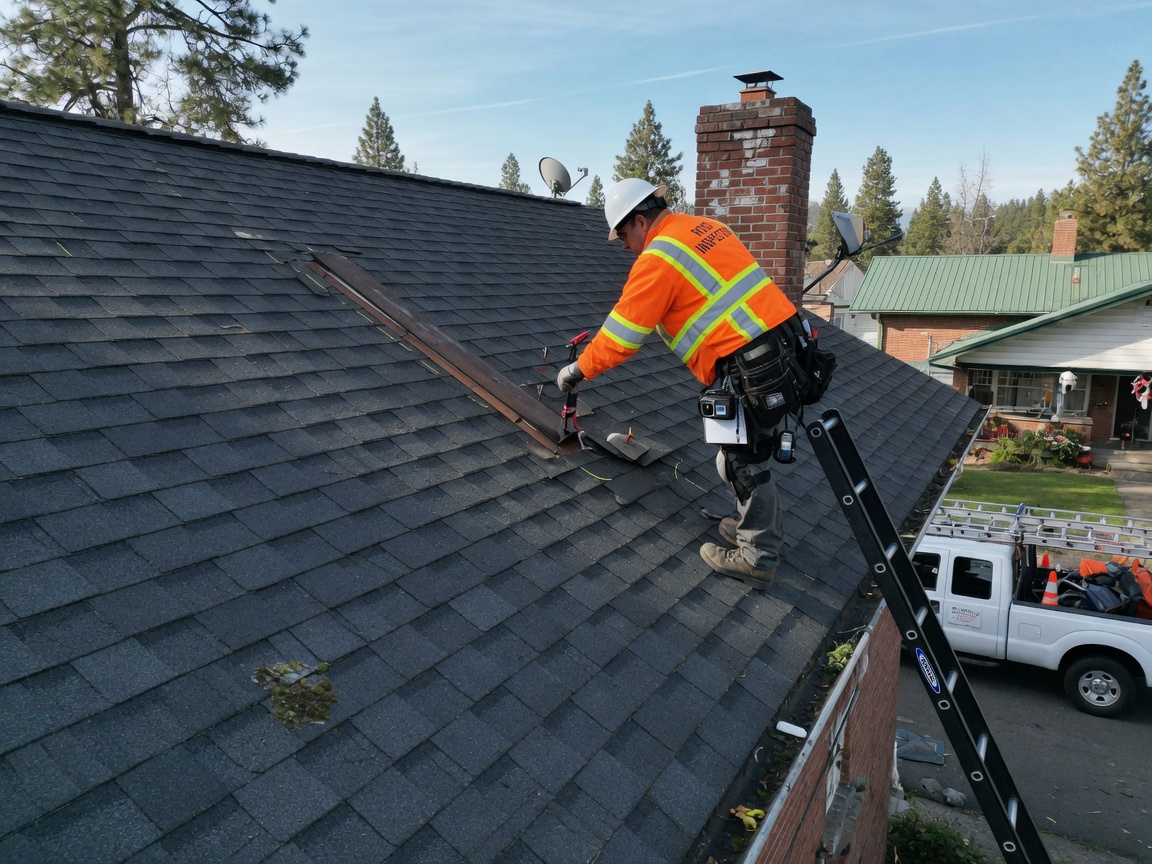
Spokane's older housing stock in areas like the South Hill and Browne's Addition often features asphalt shingles installed decades ago that show wear from repeated freeze-thaw cycles. A proper inspection checks underlayment integrity, flashing around chimneys, and attic ventilation because trapped moisture from winter snow melt accelerates deck rot in these homes, sometimes revealing damage severe enough to need a full asphalt shingle repair. Inspectors also evaluate ridge vents and soffits to confirm airflow prevents ice dam formation common along the Spokane River corridor.
Wind-driven rain and heavy snow loads in Spokane County require checking rafter spacing and sheathing condition during every inspection. Homes built before 1980, including in Southgate, frequently have undersized rafters that sag under accumulated snow, and inspectors look for prior repairs that may have used mismatched materials. Drone or ladder access reveals granule loss on south-facing slopes where UV exposure is strongest, helping owners plan targeted roof repair instead of full replacements.
Edge cases include moss growth on shaded north slopes near Manito Park, best addressed with moss removal treatment, and sealant failure around skylights after summer heat. Code notes for Spokane require proper step flashing at valleys and walls, and inspectors flag missing drip edge that allows water intrusion during spring rains, a common finding in Trentwood. Homeowners receive written findings with photos and prioritized recommendations so they understand exactly which issues need attention before the next winter.
Technician insight
In Spokane the thing that catches most people out with roof inspection is undersized attic insulation on pre-1970 homes that turns every heavy snow into an ice dam risk along the eaves. Homeowners often miss how the north-facing slopes near the river stay damp longer and develop moss that lifts shingles over time.
South Hill Bungalow Inspection
A 1950s bungalow on Spokane's South Hill showed interior ceiling stains after a heavy March snow. The inspection found failed step flashing around a chimney and compressed insulation blocking soffit vents. We documented the issues with photos and recommended targeted flashing replacement plus insulation adjustment to restore airflow.
Roof Inspection Services We Offer
✓Attic Moisture Assessment
Checks insulation and ventilation for signs of condensation or past leaks that signal roof deck problems in Spokane winters.
✓Shingle and Flashing Evaluation
Examines asphalt shingles, ridge caps, and step flashing around chimneys for cracks, lifting, or improper overlaps common after heavy snow.
✓Drone Roof Survey
Provides high-resolution images of steep or complex roofs in Spokane neighborhoods without risking ladder access on older homes.
✓Ice Dam Risk Inspection
Identifies poor attic insulation and ventilation spots that lead to ice dams along eaves during Spokane's freeze-thaw periods.
✓Gutter and Downspout Check
Verifies proper drainage and attachment to prevent water backup under roof edges during spring runoff in the Spokane Valley.
Roof Inspection Cost in Spokane, WA
| Service | Typical Range | What Affects It |
|---|---|---|
| Basic Single-Story Inspection | $175–$275 | Standard asphalt shingle homes under 2,000 sq ft |
| Two-Story Or Complex Roof Inspection | $250–$375 | Steep pitches or multiple valleys common in South Hill homes |
| Drone-Only Survey Add-On | $75–$125 | When ladder access is unsafe or limited |
Ranges are typical for Spokane, WA and confirmed with an exact written quote before any work starts.
How it works
- 1
Schedule And Arrival
Book during business hours and a technician arrives at your Spokane home with ladder, drone, and inspection tools.
- 2
Exterior Walk And Drone Pass
Technician examines all roof planes, flashing, and penetrations while using a drone for overhead views of inaccessible sections.
- 3
Attic And Interior Review
Enters the attic to check for moisture stains, insulation condition, and ventilation effectiveness tied to roof performance.
- 4
Report Delivery
Provides a written summary with photos and prioritized action items within 48 hours of the visit.
Pricing
Most roof inspections in Spokane fall in a modest range depending on home size and roof complexity.