
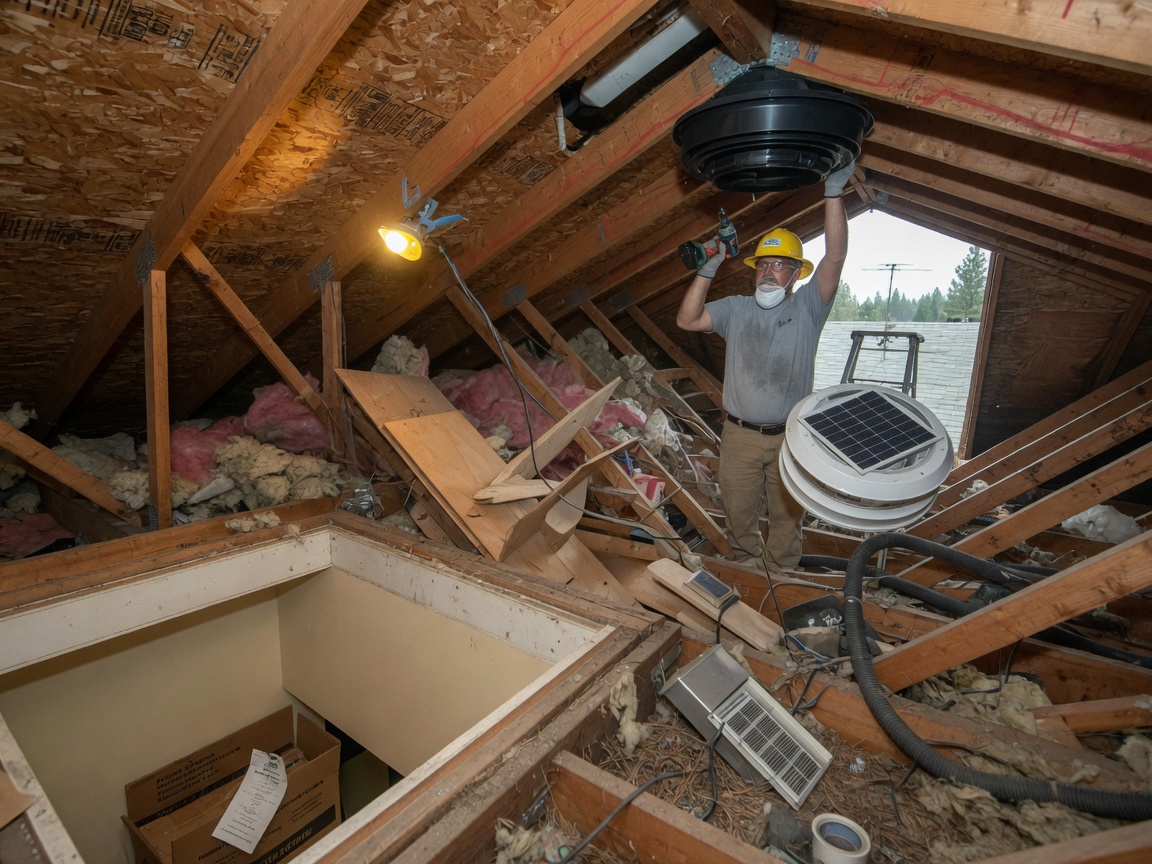
Spokane winters bring heavy snow loads that trap heat in poorly ventilated attics, melting snow into ice dams along eaves in neighborhoods like the South Hill and Perry District. Upgrading ventilation means adding balanced intake and exhaust paths that keep roof deck temperatures closer to outside air, reducing the chance of water backing up under shingles. Older Spokane County homes built before the 1980s, including in Arrowhead, often have only gable vents or none at all, so the work includes calculating net free vent area based on actual attic square footage and roof pitch rather than guesswork.
Proper attic ventilation also manages summer heat buildup that bakes asphalt shingles from below in Spokane's dry, sunny months. We inspect existing attic insulation levels, check for blocked soffits from debris or paint, and ensure ridge vent runs are continuous where the roof allows. In homes near the Spokane River or on sloped terrain, such as Nevada-Lidgerwood, we pay extra attention to wind-driven rain that can enter poorly sealed vents and cause sheathing rot over time.
Code requirements in Spokane County call for one square foot of net free ventilation per 150 square feet of attic space when a vapor retarder is present, and we verify this during every upgrade. The job frequently uncovers hidden issues such as compressed insulation blocking airflow paths or turbine vents that have seized from years of exposure to the area's freeze-thaw cycles, sometimes alongside failing vent pipe flashing that needs attention at the same time.
Homeowners in Spokane often notice higher heating bills or ceiling stains before realizing the attic is the culprit. An upgrade typically combines new ridge venting with additional soffit vents and sometimes powered exhaust where natural flow proves insufficient due to complex rooflines common in the Garland and Browne's Addition areas, and a roof inspection beforehand helps confirm the scope of work needed.
Technician insight
In Spokane, the thing that catches most people out with attic ventilation upgrade is the heavy snow load on South Hill homes that turns small venting shortfalls into ice dams fast; older houses often have insulation stuffed right up against the roof deck, blocking what little airflow existed, so we always pull back batts before adding new vents.
South Hill Ice Dam Prevention
A 1970s split-level in the South Hill showed recurring ceiling stains after heavy snow. We found blocked soffits and only two small gable vents for a 1,200 sq ft attic. We added continuous ridge venting and opened additional soffit sections, restoring proper airflow and eliminating the ice dam source without disturbing the existing roof.
Attic Ventilation Upgrade Services We Offer
✓Ridge Vent Installation
Adds continuous ridge venting along roof peaks to release rising heat and moisture before it damages shingles in Spokane winters.
✓Soffit Vent Addition
Installs intake vents in eaves to pull cool air into the attic, preventing ice dams common on South Hill homes with steep pitches.
✓Gable Vent Replacement
Replaces outdated or undersized gable vents with properly sized units that improve cross-ventilation in older Spokane County houses.
✓Turbine Vent Upgrade
Swaps failing turbine vents for modern units that spin freely through freeze-thaw cycles and reduce attic humidity year-round.
✓Attic Fan Installation
Adds powered exhaust fans where roof complexity limits natural airflow, helping control summer heat in Spokane's dry climate.
✓Ventilation Assessment and Balancing
Calculates required net free vent area and corrects imbalances that lead to roof damage in Spokane neighborhoods.
Attic Ventilation Upgrade Cost in Spokane, WA
| Service | Typical Range | What Affects It |
|---|---|---|
| Ridge vent addition (per 10 ft) | $250–$450 | Higher on steep or multi-plane roofs common in South Hill. |
| Soffit vent installation (per side) | $300–$600 | Depends on eave length and access in older homes. |
| Turbine vent replacement | $150–$300 | Lower when existing curb can be reused. |
| Full ventilation assessment | $100–$200 | Credited toward work if upgrade proceeds. |
| Powered attic fan add-on | $400–$750 | Includes electrical tie-in where needed. |
Ranges are typical for Spokane, WA and confirmed with an exact written quote before any work starts.
How it works
- 1
Initial Attic Inspection
We measure attic space, check existing vents, and note insulation condition while on site in your Spokane home.
- 2
Ventilation Calculation
We calculate required net free vent area based on attic size, roof pitch, and local code for Spokane County.
- 3
Material Selection And Access
We choose ridge, soffit, or turbine options suited to your roof type and create safe access points without disturbing shingles.
- 4
Installation And Sealing
New vents are cut in, flashed properly, and sealed against wind-driven rain common near the Spokane River.
- 5
Final Airflow Check
We verify balanced intake and exhaust and confirm no new moisture paths were created during the upgrade.
Pricing
Pricing varies by home size, roof complexity, and number of vents needed; most Spokane attic ventilation upgrades fall in the mid-range for labor and materials.