
2026-08-21 · Mike Ellison
How To Inspect Your Roof For Ice Dam Damage In Spokane
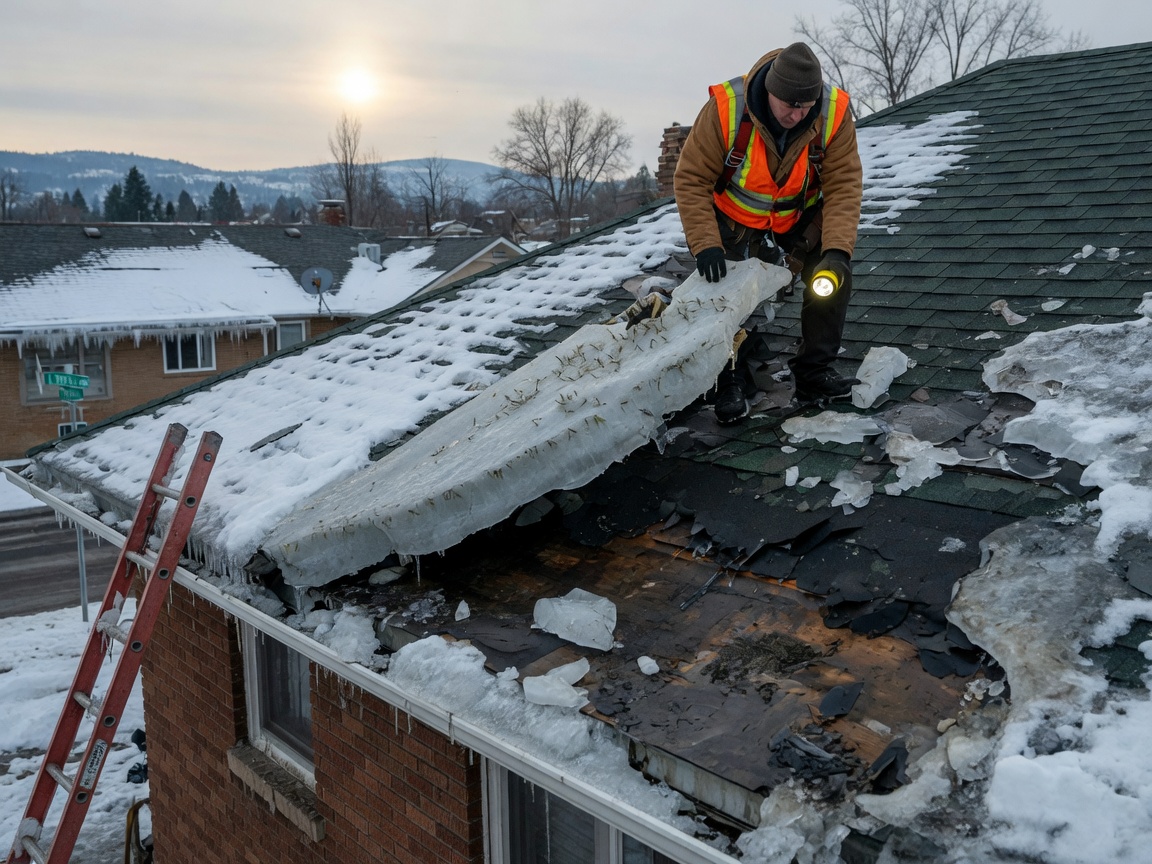
Start your inspection by entering the attic after a thaw and looking for dark water stains along the eaves or around penetrations, which appear within 48 hours of melting in Spokane homes. These stains indicate ice dams have forced water under shingles during the freeze-thaw cycles common in Spokane County. Older homes in neighborhoods like North Hill and Manito often lack sufficient attic insulation, making them more prone to warm roof surfaces that melt snow unevenly and form dams along the gutters.
Preparing for a Safe Inspection
Schedule the attic portion of your check during daylight hours when temperatures sit above freezing to avoid slipping on remaining ice. Wear a headlamp, dust mask, and gloves because fiberglass insulation in Spokane attics from the 1960s and 1970s often contains settled dust and occasional rodent droppings. Bring a notepad to mark rafter locations so you can later match interior stains to exterior roof sections. Avoid walking on the roof itself during or right after snow events; instead, use binoculars from the ground to scan eaves on homes in areas like Five Mile Prairie where wind can pile snow unevenly against chimneys and valleys. Keep a ladder ready only for ground-level gutter viewing and never climb when ice remains on rungs.
Spotting Interior Signs of Ice Dam Damage
Water stains on ceiling drywall or along the top of interior walls usually show first in upper-floor bedrooms of two-story Spokane homes. Check the underside of roof sheathing for dark streaks or mold growth, especially where rafters meet the top plate near the eaves. In homes around Cliff-Cannon or Browne's Addition, original knob-and-tube wiring can make attic access tighter, so use a mirror on a stick to view tight spaces without disturbing insulation. Note any soft or sagging sheathing boards, which indicate prolonged moisture exposure from repeated ice dam leaks. These interior clues often appear weeks before exterior shingle damage becomes visible from the street.
Checking the Exterior from the Ground
Scan the north-facing eaves first because Spokane's prevailing winter winds deposit more snow on those slopes. Look for lifted or curled shingle edges along the first three courses above the gutter line, a common result when ice dams push water backward under the tabs. Examine flashing around chimneys and plumbing vents for rust or gaps where melted water has worked its way underneath. In neighborhoods such as Lincoln Heights or Comstock, mature trees can shade roofs and slow snow melt, so pay extra attention to those shaded sections. Use binoculars to inspect for granule loss in the gutters, which signals shingle wear accelerated by standing ice and water.
Knowing When Professional Help Is Needed
If you find multiple interior stains or any soft sheathing, contact a roofing contractor rather than attempting repairs yourself. Roof Inspection professionals can use moisture meters and infrared cameras to locate hidden damage behind insulation. Persistent ice dams recurring in the same locations often require ice dam removal combined with attic ventilation upgrades. For cost context on related work, review What Affects Roof Repair Costs In Spokane Wa. Homeowners in Spokane who catch damage early typically limit repairs to flashing replacement or targeted shingle replacement instead of full roof replacement.