
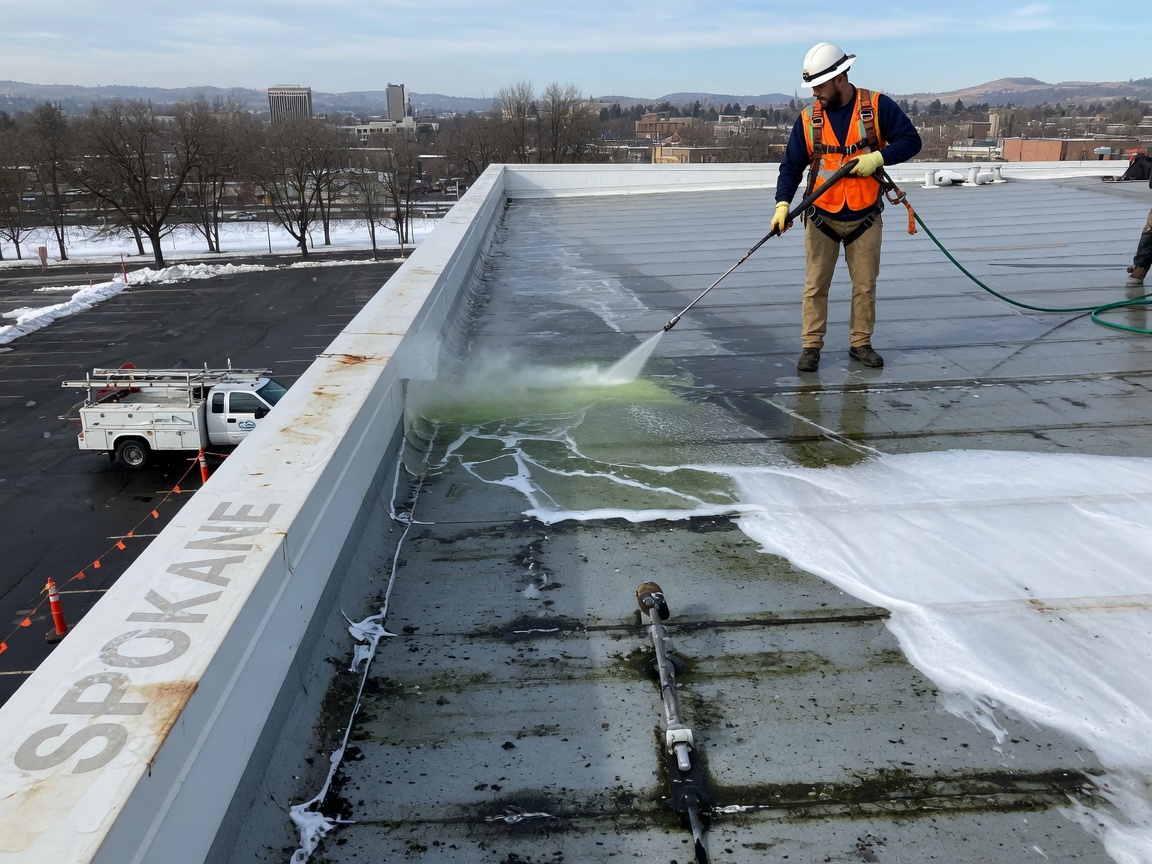
Spokane commercial roofs often sit under repeated freeze-thaw cycles that trap moisture under layers of moss and pine needles. Left alone, this buildup holds water against seams and flashings, accelerating membrane wear on buildings throughout Spokane County and nearby Spokane Valley, and worn seams often surface during a commercial roof inspection. Cleaning crews must work around HVAC units, skylights, and older gravel surfaces without damaging coatings or pushing debris into internal drains.
Many downtown Spokane and Browne's Addition commercial structures still use single-ply roofing or TPO roofing membranes installed decades ago. These surfaces collect fine silt from the surrounding Palouse hills that mixes with organic matter and creates slippery, algae-covered patches. Proper cleaning uses low-pressure methods and roof-safe solutions to avoid abrading the surface or voiding any remaining manufacturer warranties.
Drainage on Spokane commercial roofs is frequently compromised by leaves from nearby maple and cottonwood trees that line streets in the University District and South Hill, including properties near Riverpoint. When scuppers and internal leaders clog, standing water adds weight during winter snow events. Cleaning routines include clearing these lines so water moves freely before the next cold snap, part of the routine commercial roof maintenance we recommend on a set schedule.
Edge details around parapets and equipment curbs collect the most debris because wind patterns in the Spokane Valley funnel material against vertical surfaces, especially on exposed sites in Northtown. Technicians inspect these transitions during every visit, removing buildup that would otherwise trap moisture against metal flashings and cause premature corrosion.
Technician insight
In Spokane, the thing that catches most people out with Commercial Roof Cleaning is how quickly pine needles and moss pack against parapet walls on older flat roofs downtown. Once that organic mat freezes and thaws through winter, it pries at the edge flashings that are already working hard against our wind-driven rain. Checking those transitions every time prevents small leaks that show up only after the first heavy snow.
University District Office Building
Moss had covered the modified bitumen seams on a two-story Spokane commercial building near Gonzaga. Water was ponding behind clogged scuppers after fall leaf drop. Crews removed the growth, flushed the internal drains, and cleared debris from the equipment pads. The roof now sheds water without standing pools before the next freeze.
Commercial Roof Cleaning Services We Offer
✓Moss and Algae Removal
Removes organic growth from commercial membranes and gravel surfaces using roof-safe treatments that prevent regrowth during Spokane's wet seasons.
✓Debris and Needle Clearing
Clears pine needles, leaves, and silt from flat roofs and drainage paths common around Spokane commercial properties near tree-lined streets.
✓Drain and Scupper Cleaning
Flushes internal drains, scuppers, and downspouts to restore flow before winter snow loads increase on Spokane County buildings.
✓HVAC and Equipment Pad Cleaning
Cleans around rooftop units and curbs where debris collects against flashings on commercial roofs throughout the Spokane area.
✓Skylight and Vent Maintenance
Removes buildup from skylights and vents so natural light and airflow remain unobstructed on older commercial structures.
Commercial Roof Cleaning Cost in Spokane, WA
| Service | Typical Range | What Affects It |
|---|---|---|
| Small commercial roof under 5,000 sq ft | $450–$850 | Moss level and number of drains affect final cost. |
| Mid-size commercial roof 5,000–15,000 sq ft | $900–$1,800 | Equipment density and access points change scope. |
| Drain and scupper add-on | $75–$150 per drain | Internal lines requiring extra flushing increase price. |
| Recurring seasonal service | $350–$650 per visit | Two-visit annual plans reduce per-visit cost. |
Ranges are typical for Spokane, WA and confirmed with an exact written quote before any work starts.
How it works
- 1
Site Walk and Drainage Check
Walk the roof with the building contact to locate drains, note moss patches, and identify any standing water areas before work begins.
- 2
Debris Removal
Remove loose needles, leaves, and silt by hand and with soft-bristle tools, directing material toward designated drop zones.
- 3
Targeted Treatment
Apply moss and algae treatment to affected zones and allow dwell time before rinsing to avoid damaging membrane surfaces.
- 4
Drain Flushing and Final Walk
Flush all drains and scuppers, then perform a final inspection to confirm water flows freely and no residue remains near flashings.
Pricing
Upfront quotes provided during business hours Mon–Fri 8am–6pm, Sat 9am–2pm.