
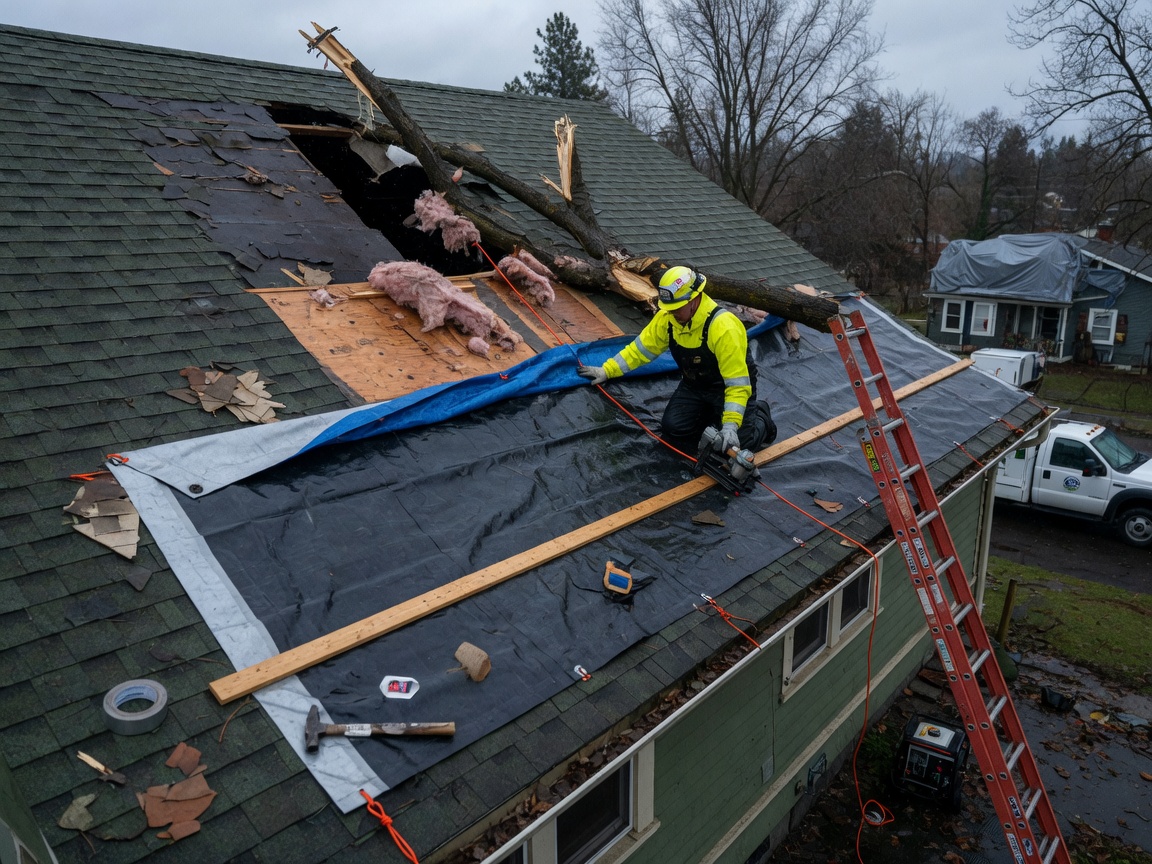
Nine Mile Falls sits along the Spokane River with homes spread across hilly terrain and older lots that see heavy winter snow loads and wind funneled through the valley. Roof repair work here often starts with checking for ice dam damage along eaves and replacing sections where asphalt shingles have curled from repeated freeze-thaw cycles. Crews plan routes carefully on roads like Nine Mile Road and West Nine Mile Road because narrow shoulders and steep driveways limit where trucks can stage materials.
Many houses in the area date from the 1960s through 1980s and still carry original roofs that have reached the end of their service life. When roof damage repair is needed after a wind event or heavy snow, crews focus on matching existing shingle profiles and ensuring proper ventilation so moisture does not build up in the attic spaces common in these ranch and split-level homes. The proximity to the reservoir also means extra attention to flashing around skylights and chimneys that face prevailing weather off the water.
Homeowners along the river corridor often notice leaks first near valleys and penetrations because runoff from surrounding slopes concentrates there. Local roof repair crews schedule inspections early in the week so any needed materials can be ordered before weekend closures and still finish work during the posted hours of Monday through Friday 8am to 6pm or Saturday 9am to 2pm.
Around Nine Mile Falls
We regularly work near:
- 📍Nine Mile Falls Dam
- 📍Nine Mile Reservoir
- 📍Nine Mile Falls Elementary School
- 📍Riverside State Park
- 📍Suncrest area along Highway 291
Roof Repair in Nine Mile Falls — Local Notes
- •Homes near Nine Mile Reservoir often have steeper pitches that collect more snow and require extra underlayment during roof repair.
- •Winding access roads and limited shoulder space mean crews stage materials in smaller loads to avoid blocking Nine Mile Road.
- •Older ranch houses from the 1970s frequently need ridge vent upgrades when roof damage repair includes new shingles.
- •Sloped lots near the dam create drainage paths that direct water toward foundations, so flashing details receive extra care.